
ICT Current Trends
When I was in primary school, from 2000 to 2007, classrooms had a whiteboard or chalk board. In fact, you were lucky to get a whiteboard. The older rooms had chalk boards, so in about 2004, all rooms were equipped with whiteboards. It wasn't until high school, about grade 10, that interactive whiteboards were installed. By my final year, 2012, every room had an interactive whiteboard. This new piece of technology was relatively new in schools and was exciting because it meant that students would become more engaged in class work. However, not all teachers were used to this new product. Some older teachers would still use regular whiteboards whereas the younger teachers would use the interactive whiteboards. Some teachers would use both. Personally, I preferred either type of board. The whiteboards were easier to draw diagrams and write notes on, yet the interactive whiteboards were visually engaging with digital storytelling, videos, PowerPoint, music and certain interactive activities. Laptops were also brought into the school in 2011 and became a vital element of study. In our high school of 1600 students, there were only about 150 laptops, but we still had computers in some rooms. A log book was constructed in order to track who used the laptop last and when it was returned. They were handy because they were portable and the battery life was fairly long because they charged over night and during the day if not in use. Even though I only got to use them for two years, I found them to be very helpful and a great asset to school study.
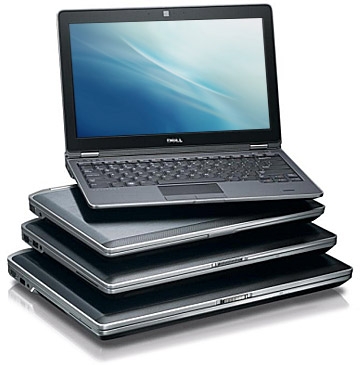
Dell laptops were used in high school.
As technology keeps on growing and changing, new pieces of technology have been added to classrooms. There are new ways to submit, send and set up classroom activities. Laptops, for example, are a common device that possess the same components as computers. However laptops are more popular as they are able to be taken anywhere, are smaller and can run on battery. Smart devices or phones have also become an essential for study for some students. They are also smaller and are like an even more compact version of a laptop. Devices include "... mobile phones, MP3 players, laptops computers, tablet PCs, games devices, scanners, interactive whiteboards, digital cameras..." (White, 2008). Programs, like Top Hat Monocle, can be used on laptops and smart devices so students can answer polls or questions the teacher presents on a projector. This sort of program allows students to feel more confident in what they post because they do not have to raise their hand or explain their answers. Instead, students can send their answers to a site, select an already formulated answer and even link to other pages. The portable devices are also popular and handy in where the students can submit their work. Students can do work from the bus, at home, in a park, or just about anywhere. As long as there is internet connection or simply battery, the possibilities are endless to what students can do. The use of writing down answers and information has almost become a way of the past. Blogger Robert Hawkins believes that, "The ordered classroom of 30 desks in rows of 5 may quickly become a relic of the industrial age..." (Hawkins, 2010). Since everything is done online, it seems unnecessary for anything to be written down. Technological devices have made it very simple for students to do their work anywhere.
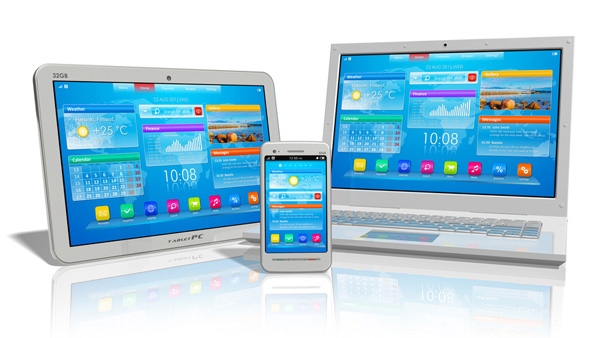
iPads, iPhones/ smart devices and laptops: common and current technology used in education.
